Research
New Ways We're Training Robots Without Building More Robots
You don't always need another robot to train a robot. Researchers are finding ways to give robots more experience without putting every training example on physical hardware.

Training robots in the real world is expensive. Hardware is limited, experiments take time, and repeatedly making a robot perform the same task can wear down components or introduce unnecessary risk. Researchers are therefore looking for ways to generate more training experience without relying entirely on physical robots.
Simulation, human demonstrations, video, synthetic data, and foundation models are all becoming part of that shift.
Simulation and Human Demonstrations
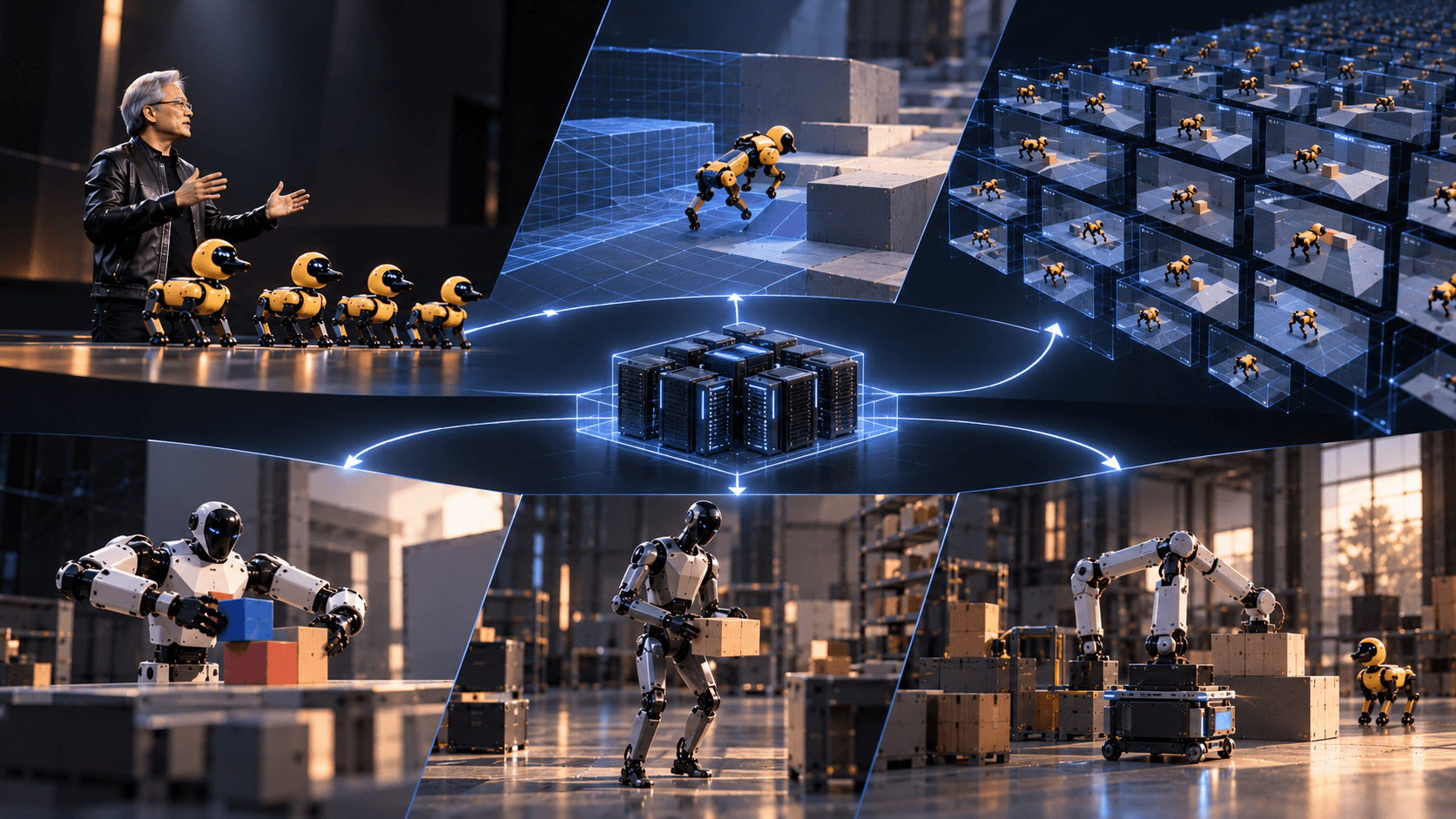
The most obvious alternative to physical hardware is simulation. A simulated robot can repeat a task thousands of times without needing a physical robot for every attempt. Researchers can run multiple environments in parallel, change object positions, introduce different obstacles, and collect large amounts of training experience without risking hardware.
Simulation also makes failure cheap. A robot can collide with an object, take the wrong path, or completely fail a task and simply start again. This is one reason simulation has become an important part of modern robot training.
But simulation cannot capture every detail of the physical world. Contact, friction, sensor noise, and other real-world effects can be difficult to reproduce accurately. That is where human demonstrations become useful.
Instead of programming every movement, a person can show the robot how a task should be performed. These demonstrations provide information about the sequence of actions, the objects involved, and how the task is carried out. For manipulation especially, showing a robot what a successful interaction looks like can be easier than manually defining every motion.
Learning From Video and Synthetic Data
A demonstration doesn't necessarily have to come from a robot. Videos of humans can provide another source of training data, allowing models to learn from actions recorded in the real world. There are already enormous amounts of video showing people cooking, assembling objects, using tools, and interacting with their surroundings.
The challenge is turning that visual information into something a robot can actually use. A human video doesn't directly specify how a robot should move its joints, and the robot may have a completely different body and set of capabilities from the person in the recording.
Synthetic data offers another way to increase the amount of available training experience. Researchers can generate objects, environments, and scenarios digitally, then vary their properties to create large numbers of different examples. Lighting, object positions, backgrounds, obstacles, and other conditions can all be changed without recording each scenario manually.
This makes it possible to expose a model to situations that would be difficult or expensive to collect in the real world. Simulation and synthetic data can therefore complement physical demonstrations by providing the scale that real-world data collection often lacks.
The broader idea is straightforward: give the robot more experience without requiring more physical experiments.
Foundation Models Bring It Together
The amount of training data matters, but so does what a model can do with it. Robot foundation models aim to learn from large and diverse datasets rather than being built around a single task. They can combine information from vision, language, demonstrations, robot states, and actions to develop more general capabilities.
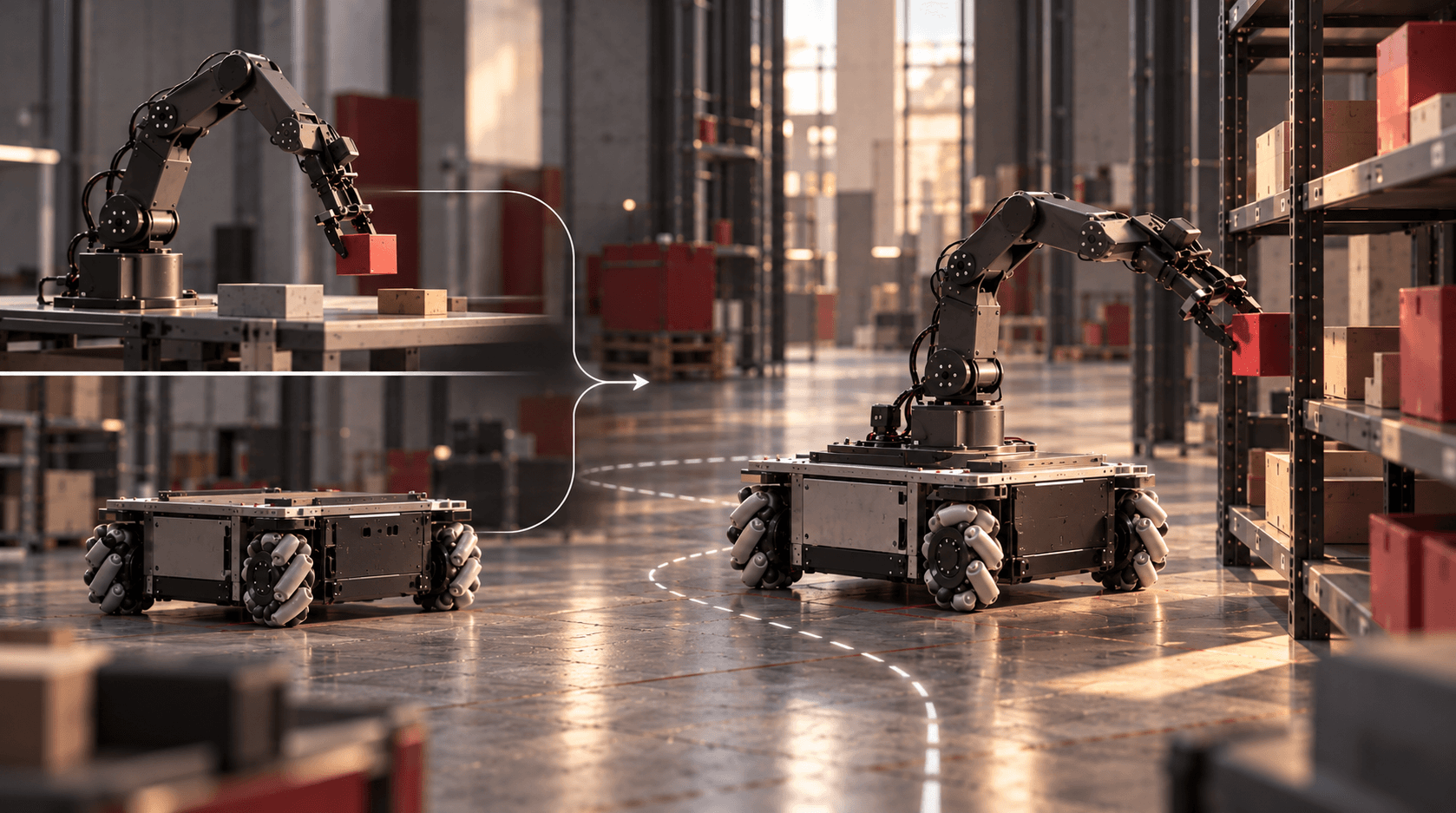
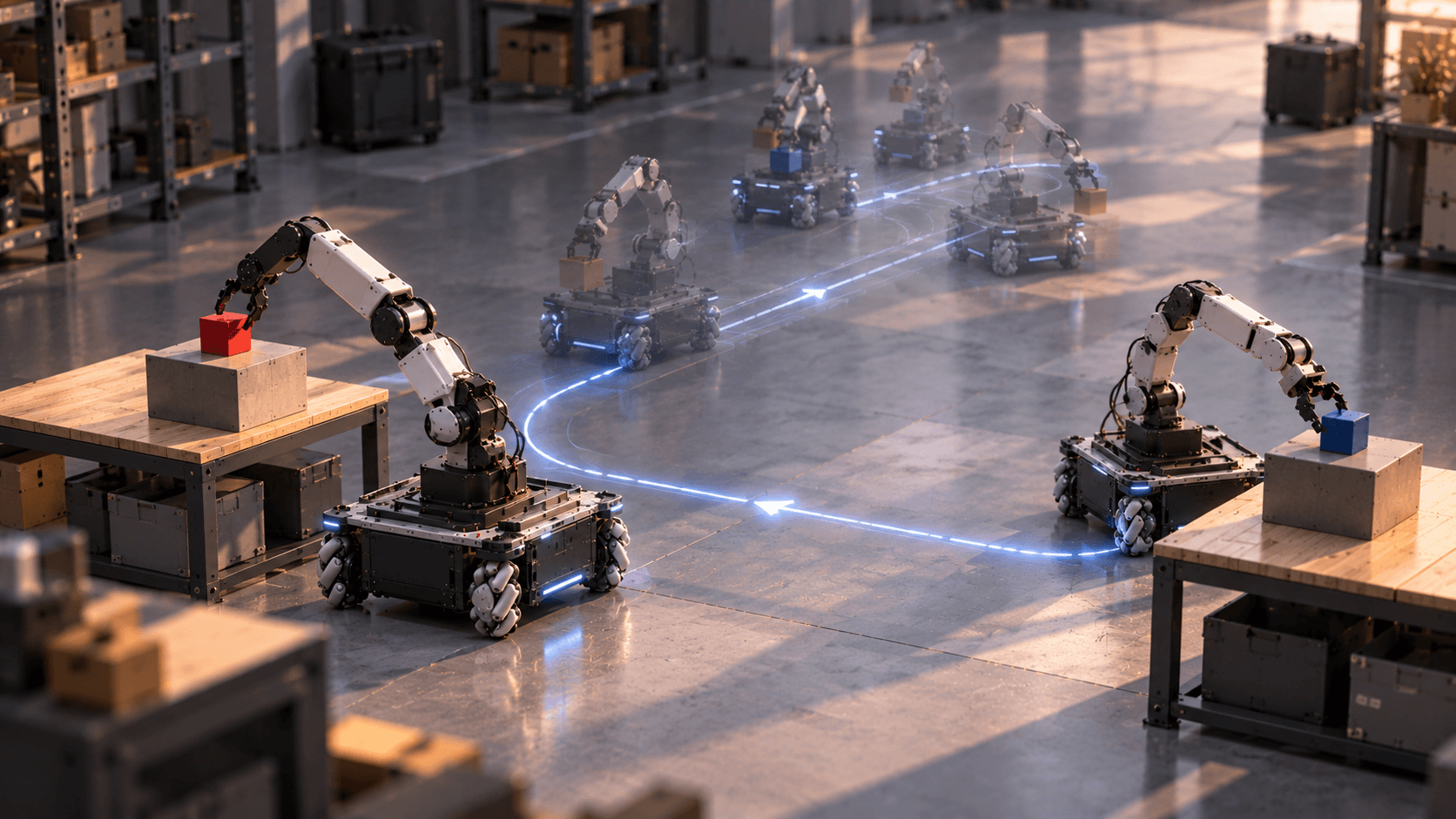
This changes the traditional training workflow. Instead of starting with a new model whenever a different task appears, a robot can begin with a model that already has some understanding of objects, actions, and physical interactions. The new task can then be approached by adapting or prompting that existing knowledge.
We've already seen this idea in robot systems learning from a single video demonstration. Rather than creating a new task-specific training pipeline, the demonstration itself can provide information about what the robot needs to do.
Foundation models don't eliminate the need for training data or physical robots. Their value is that knowledge learned from one large collection of experiences can potentially be reused across many different tasks and environments.
That makes the combination of simulation, demonstrations, video, and synthetic data more interesting. Each provides a different source of experience that can contribute to the same underlying model.
Making Robot Training More Scalable
None of these approaches completely replaces physical robots. Simulation can miss details of the real world, human videos don't contain every piece of information needed for direct robot control, and synthetic data can introduce unrealistic scenarios. Foundation models still require large amounts of training data and careful evaluation.
The advantage comes from combining these methods. A robot might learn broad patterns from large datasets, practice behaviors in simulation, learn from human demonstrations, and use synthetic data to fill gaps in its training distribution. Physical robots can then be used where real-world interaction is necessary.
This changes the role of hardware in the training process. Instead of using physical robots to generate every possible example, researchers can reserve them for the situations where real-world data provides information that simulation or recorded data cannot.
The goal isn't to build a robot for every training example. It's to give robots as much useful experience as possible while reducing the amount of physical hardware and real-world experimentation required.
That is what could make robot training more scalable.
More experience doesn't always have to mean more robots.
FAQ
Why don't researchers train robots entirely on physical hardware?
Physical training is expensive, slow, and can introduce wear or risk to hardware. Simulation and other data-generation methods allow researchers to create and test far more training examples at lower cost.
How do human demonstrations help train robots?
Human demonstrations provide examples of how tasks are performed, including the sequence of actions and interactions with objects. They can be particularly useful for behaviors that are difficult to describe through manually programmed rules.
Why is video useful for robot learning?
Video provides large amounts of information about how people interact with objects and environments. Models can use this data to learn patterns that may eventually transfer to robotic tasks.
What is synthetic data in robotics?
Synthetic data is artificially generated training data, often created using simulation. Researchers can vary objects, environments, and conditions to produce large numbers of training examples.
Do foundation models eliminate the need for robot data?
No. Foundation models still require substantial training data. Their advantage is that knowledge learned from large datasets can potentially be reused across multiple tasks instead of training a separate model from scratch each time.